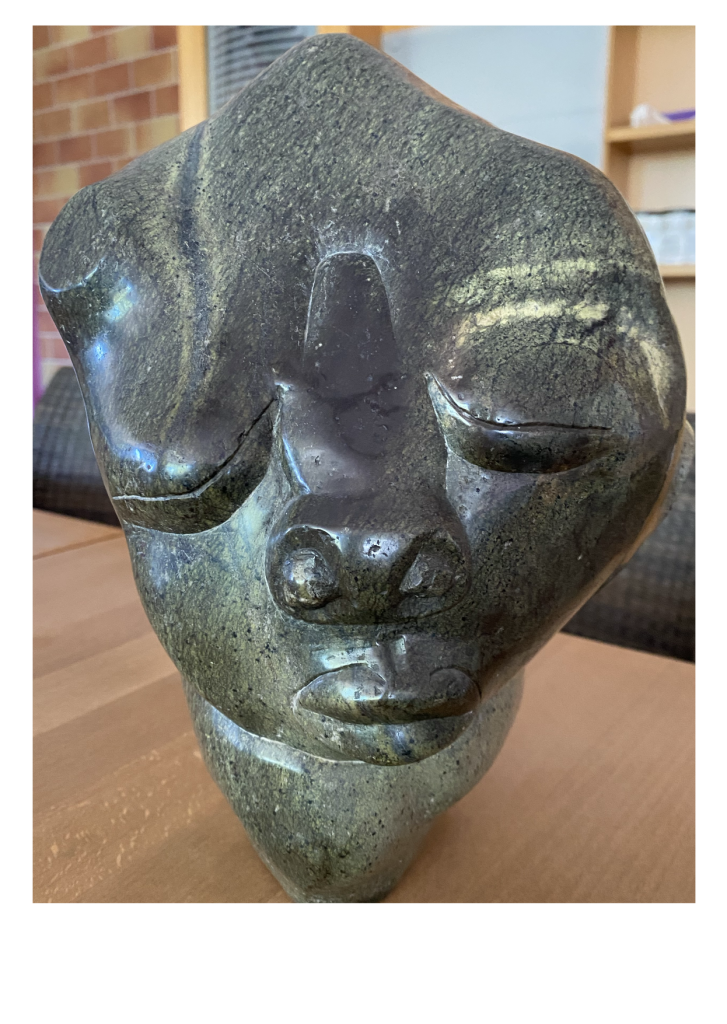
whose name has long since been replaced by titles and whose flesh is more memory than matter, turns his head, not hurriedly, to face the boy from the valley. One eye is nearly white, the other the colour of old obsidian, and both seem to float in a nest of wrinkles as if gazing from a place further than mere age. In the pause between word and answer, the question asked by the boy, suspends in the thatched air.
Every surface in the hut seems to lean toward the wise One: the cracked-rib mats, the gourd vessels, the bones of birds lashed with cording. Generations have sat cross-legged here, trailing dust and hope, each supplicant convinced their ache was unique, their question unanswerable. The wise One has watched them all, catalogued their doubts, measured the echo of their departures in the residue of their voices. The wise One has been asked this question, or versions of it, a thousand times: by pilgrims thin from fasting, by grieving mothers, by warriors with blood still slick on their wrists. By children, especially, who always ask last and mean it most.
Tonight, it is the boy from the valley. The boy’s face is broad, clean-skinned, but with a lattice of scars that speak of mountain brambles. His feet are bare, and when he sits, he tucks them under in the manner of those who expect to be called upon again and again. He is, in the manner of all boys, at once terrified and unable to leave. The wise One senses the boy’s heartbeat, not through the air, but through the way his words stick behind his teeth, the way his eyes flicker to the exit every time the hut’s shadows shift.
This time, the wise One does not smile, instead, the wise One’s hands, knotted, gentle, veined with the blue of rivers in drought, rise as if to bless, or to strike, or to gather the question from the air and mould it into something less lethal. The boy cannot yet tell which. The wise One touches the centre of the boy’s chest, not hard but with an insistence as old as water. The hut seems to tilt around this gesture: the yam walls bending, the mats creaking, the air going tinny with expectation.
“You are it,” the wise One says, and though the words are little more than a murmur, they ring in the hut, then through the hut, into the red dusk that slumps outside. The phrase is so simple it feels dangerous, a sharp tool in the hands of someone unprepared.
The boy’s mouth opens, then shuts, then opens again, but the words won’t come. For all his years, twelve, perhaps, or maybe fourteen, it is impossible to tell with children of this geography, he has been raised to look outward, to expect omens in the flight patterns of crimson starlings, to gauge the mood of the ancestors in the trembling of leaves. The valley people’s stories are all about elsewhere, about the wind that brings news or the currents that ferry secrets downstream. He has never once, not in waking or in dream, considered that the answer might reside on the unswept floor of his own mind.
He tries to imagine the responsibility of being “it.” He tries to flex the muscle of his spirit around the concept, but it is too large, too slippery, like trying to collect the night’s fog in a closed fist. He wants to protest. He wants to say, “You must mean someone else.” Or, “But I don’t even know what the question truly is.” Or, “I am just a boy, and my feet are filthy, and my thoughts get tangled.” But the wise One’s finger is still on his chest, still anchoring him, and the boy feels as if he would explode into a thousand birds if that pressure were removed.
The hut is utterly silent. The wise One’s breath is imperceptible, the only movement the slow, deliberate blinking of this ancient eyes. The silence is an answer to the boy’s every protest before he can voice a single one.
The boy swallows, bows his head, unsure whether this is a gesture of respect or surrender. His hands, which always found something to fidget with, now lie useless in his lap. He feels both heavier and lighter, as if someone had swapped his bones for hollow reeds.
He stands on uncertain legs. The wise One does not move, does not bless or dismiss, does not even return the boy’s awkward half-bow. The boy has never known such indifference, and it terrifies him more than disapproval could.
He steps outside into the dusk. The light has gone blue and chill, and the first star has sprung into being above the distant ridge. He wonders, as he stands in the thickening dark, if the star knows its own name, if it has ever been told that the meaning of everything is itself. The thought is absurd, but it makes him smile, just a little. He finds himself looking back at the hut, expecting a sign, a flicker, some confirmation that the wise one is watching.
There is nothing. Only the soft night, and the coolness of the world, and the faint echo of the words: You are it.
The boy walks down the slope, past the sleeping dogs and the ash mounds, past the place where elders sometimes gather to play the bone game and squint into the future. Each step is strange, new, as if his legs belong to someone else. There are no drums tonight, no smoke, only the distant, patient blinking of the stars.
He wonders if he will ever be able to explain what happened in the hut. He wonders if he is supposed to. He wonders if he will now be set apart forever, or if, in time, everyone will begin to suspect that they too are holding the river in their palms. He is not sure which possibility frightens him more.
He stops at the edge of the fields, where the earth is soft, and the night is deepest. He looks up, the sky is vast, and the stars number more than his village, more than all the villages he has ever heard of. He tries to find the one that appeared first, the one that might have been watching him, but already the sky is crowded. He laughs out loud, surprised by the sound of it, and the laugh is not entirely his own; it belongs to the boy from the valley, and to every boy who has ever asked a question, and to the wise One, and to the hut with its walls of yam and dust and memory.
He walks home, hoping to dream, and above him, the stars blink in silence…
© KD.W.Heim
Leave a Reply